Finance & Control
Fixed Asset Register and Physical Verification for Group Companies in India
By ATTPL HOLDCO / ATTPL GROUP Editorial Team · · 3 min read
A practical guide for Indian business groups on keeping one consistent fixed asset register, tagging assets and running physical verification across all group companies.
Why assets drift away from the books
Business groups own a wide range of assets: machinery at a plant, vehicles at project sites, laptops with staff, furniture in several offices and equipment lent from one company to another. Over time the books and reality drift apart. Assets are moved without records, scrapped without approval or used by a different company from the one that paid for them.
A reliable fixed asset register protects the group in several ways. It supports correct depreciation and tax claims, helps insurance cover the right items, prevents loss and theft, and gives buyers, lenders and auditors confidence that the balance sheet is real.
Build one register format for the group
Agree a single register format that every company uses, ideally inside the group's accounting or ERP system rather than separate spreadsheets.
- Unique asset number and tag, with a clear description and serial number
- Owning company, current location and the person or department using it
- Purchase date, vendor, invoice reference and capitalised cost
- Asset class, useful life and depreciation method for the books, and block of assets for income tax
- Insurance policy reference, warranty end date and maintenance contract details
- Status, such as in use, idle, under repair, transferred or disposed
Agree common asset classes and capitalisation thresholds for all companies, so that the consolidated figures compare like with like.
Tag assets and record every movement
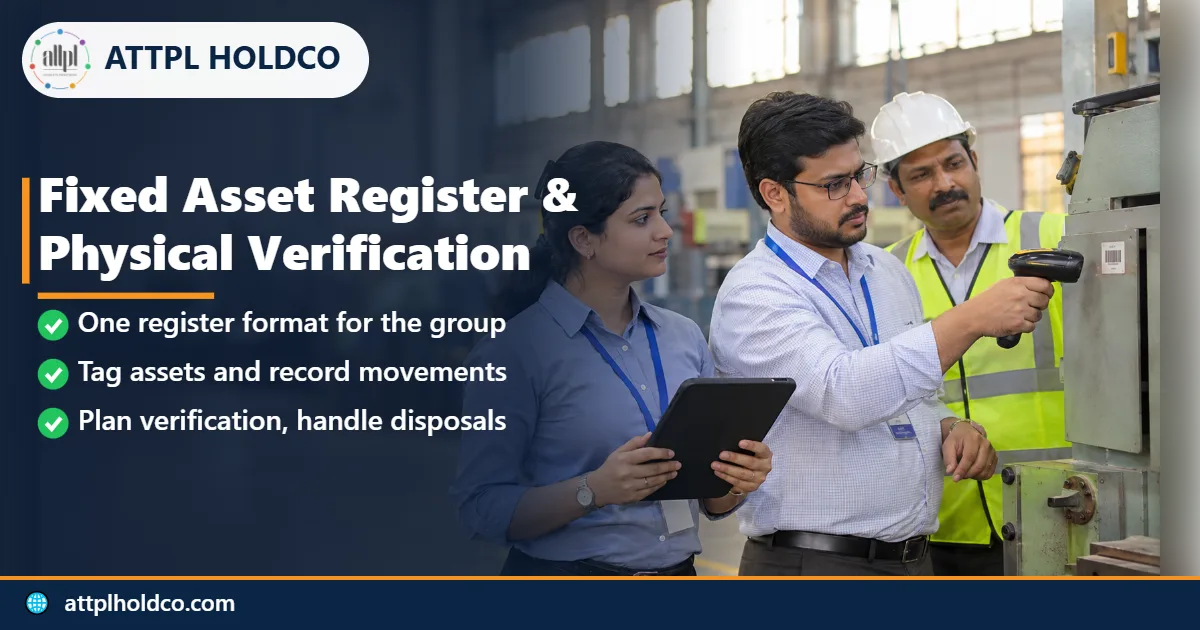
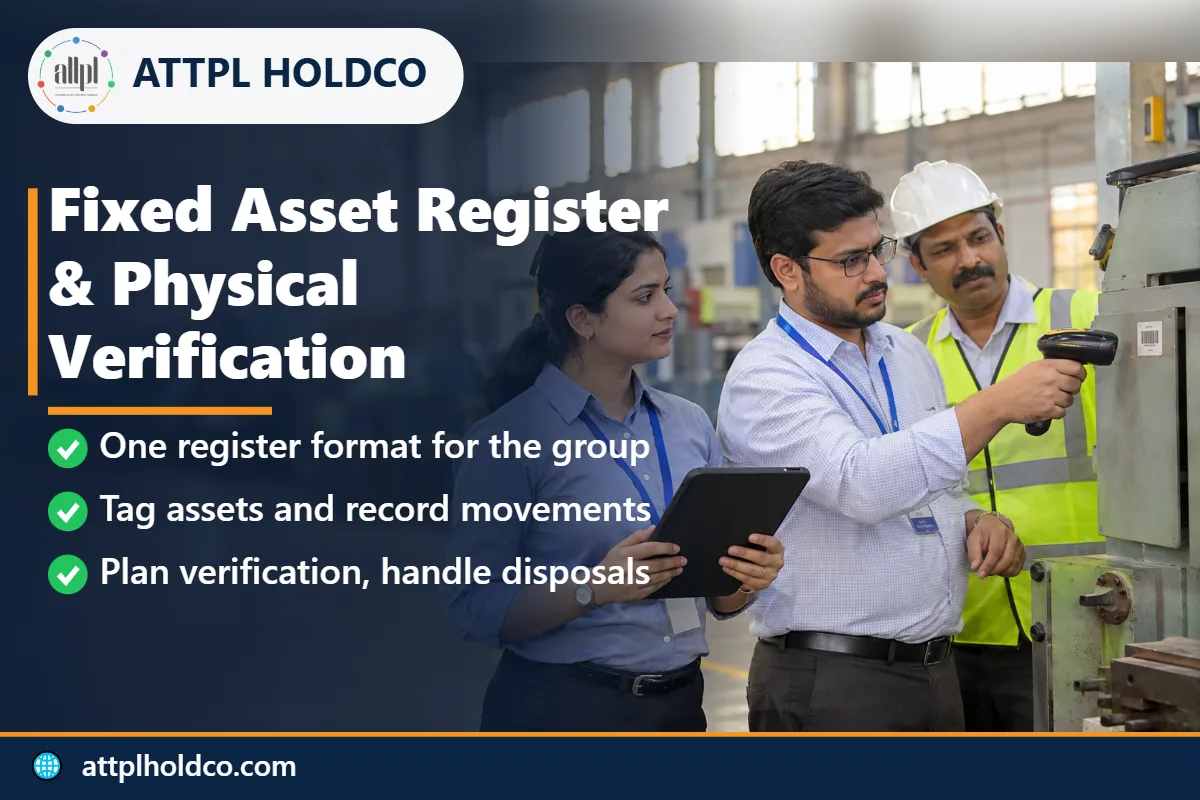
Fix a durable tag, such as a barcode or QR label, to every asset above the threshold. For vehicles and large machinery, the registration or engine number can serve as the identifier. Record transfers between locations, users and especially between group companies through a simple form approved by both sides.
When an asset moves permanently from one group company to another, treat it as a proper transaction with an invoice or written agreement, applicable GST and correct accounting in both books. Informal transfers are a common audit finding and can raise questions covered in our guide to related party transactions.
Plan physical verification
For companies covered by the Companies (Auditor's Report) Order, 2020, the statutory auditor reports whether proper records of property, plant and equipment are maintained and whether physical verification is done at reasonable intervals, with material discrepancies properly dealt with. Even where this order does not apply, regular verification is good practice.
- Set a cycle, such as all assets once a year or high-value and mobile assets more often
- Use teams independent of the asset users wherever possible
- Scan tags or tick off a printed list, and photograph assets that cannot be located easily
- List missing, damaged, idle and untagged assets separately
- Investigate differences, get approval for write-offs and update the register promptly
Time the main verification before the financial year end so that adjustments flow into the annual accounts. Our checklist for year-end close readiness shows where it fits.
Handle disposals properly
Scrapped, sold or lost assets must leave the register with documented approval, a record of sale value and correct GST and tax treatment. Idle assets in one company are often useful to another, so circulate a list of spare equipment across the group before buying new items.
Assign clear ownership
Give each company finance team responsibility for its register and a group controller responsibility for common policies and the annual verification plan. Report the results to the audit committee or board, along with actions taken on discrepancies. Over two or three cycles, the gaps shrink and verification becomes routine.
ATTPL HOLDCO
ATTPL HOLDCO, based in Jaipur, helps business groups set up finance controls, asset records and reporting that work across several companies. Toll-free: 1800 890 0815.
Frequently asked questions
How often should fixed assets be physically verified?
Most groups verify all assets at least once a year, and high-value or easily moved items more often. Agree the cycle with your auditor.
Should laptops and phones be in the fixed asset register?
If their cost is above your capitalisation threshold, yes. Below it, keep them in a separate IT inventory so they can still be tracked.
What if an asset is used by a different group company?
Document the arrangement through a transfer, lease or service agreement, so that ownership, cost and tax treatment are clear.
Sources and further reading
This article is general business information and is not accounting, legal or tax advice. Consult a qualified professional before making decisions for your business.